Now Reading: What is DSA? Why Every Programmer Must Learn Data Structures and Algorithms
- 01
What is DSA? Why Every Programmer Must Learn Data Structures and Algorithms
What is DSA? Why Every Programmer Must Learn Data Structures and Algorithms

Written by Hamza Sanaulla
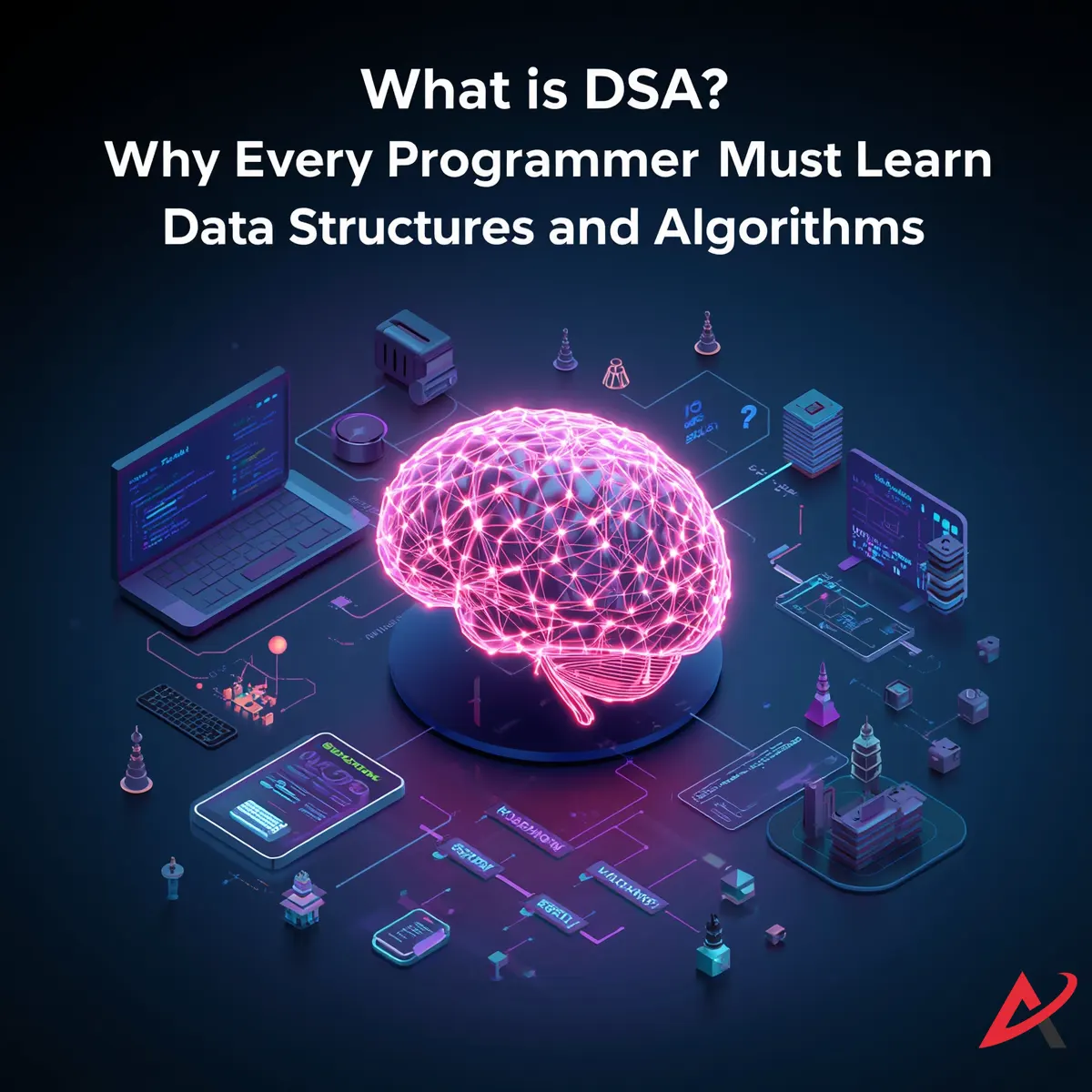
What is DSA? Why Every Programmer Must Learn Data Structures and Algorithms. Imagine you are tasked with managing a massive Amazon fulfillment center. Thousands of packages are flying in every minute. If you throw them into a giant, chaotic pile in the center of the room, finding a single smartphone box later will be an absolute nightmare. But if you organize those items into labeled bins, conveyor belts, and stacks, and use a step-by-step scanning system to retrieve them, you can find anything in seconds.
In the digital world, your code faces the same problem. Data is the cargo. How you store it and the methods you use to find or manipulate it determine whether your application runs at lightning speed or crashes under pressure.
That is the essence of data structures and algorithms (DSA). If you are wondering what is dsa for beginners with examples is, think of it as the ultimate toolkit for writing clean, fast, and scalable code. Let’s look at why mastering these DSA concepts remains the ultimate superpower for anyone in software development.
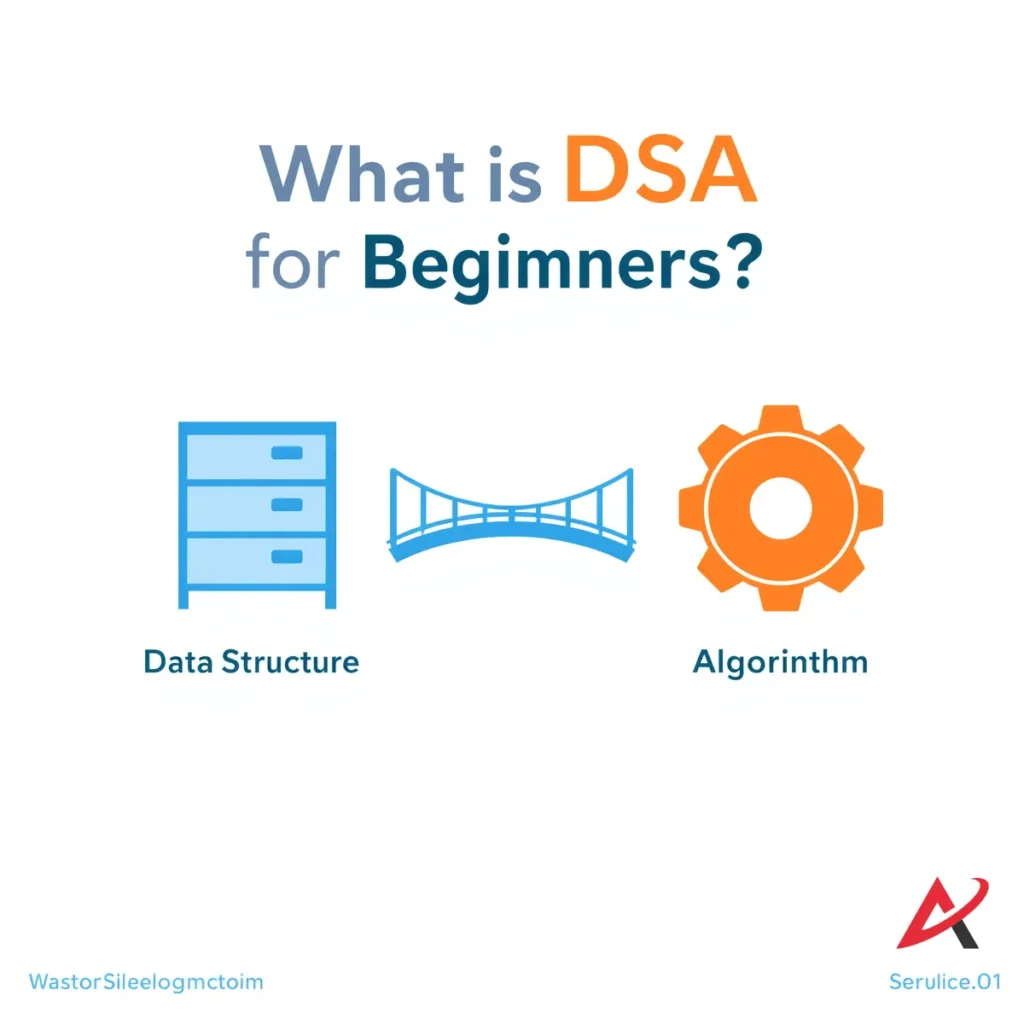
What is DSA for Beginners?
At its core, DSA is the combination of two distinct but deeply intertwined pillars that form the foundation of computer science. When you see data structures and algorithms explained simply, it comes down to a clear division of labor: a map versus an engine.
To get a firm grasp of DSA basics, think of your computer’s memory as a giant warehouse. If you don’t give the computer a specific architectural plan on how to hold your information, it treats everything like a massive, unstructured heap. A data structure is that architectural plan. It defines how data is collected, linked, and held.
An algorithm, on the other hand, is the set of steps you execute to do something useful with that organized data. If the data structure is a neatly arranged physical dictionary, the algorithm is the exact method you use to flip open the pages and locate a word. You can have the most beautifully organized database in the world, but if your step-by-step method for searching through it is horribly slow, your app will feel sluggish to the user.
When I first started writing scripts, I thought code was just about syntax. I would write nested loops over and over, thinking that as long as the green checkmark appeared on my screen, the code was perfect. It wasn’t until I tried running my program on a dataset of fifty thousand rows that my computer froze. That painful moment is when most developers realize the absolute necessity of problem-solving through structural design rather than brute-force typing. This beginner’s guide to DSA is designed to save you from that exact headache.
What Are Data Structures in DSA?
When we talk about data structures in programming, we are looking at specialized formats for organizing, processing, and storing data. Every variable, object, and collection you instantiate in code relies on an underlying structure to exist within your computer’s random-access memory (RAM).
The trick is understanding that different structures are optimized for different actions. Some make it incredibly fast to add new records but slow to search for old ones. Others allow instant lookup capabilities but demand a massive chunk of extra memory to maintain. Selecting the right structure means weighing these trade-offs against the specific goals of your feature.
An introduction to data structures requires moving past basic data primitives like integers or booleans and examining how these primitives are stitched together to form robust systems.
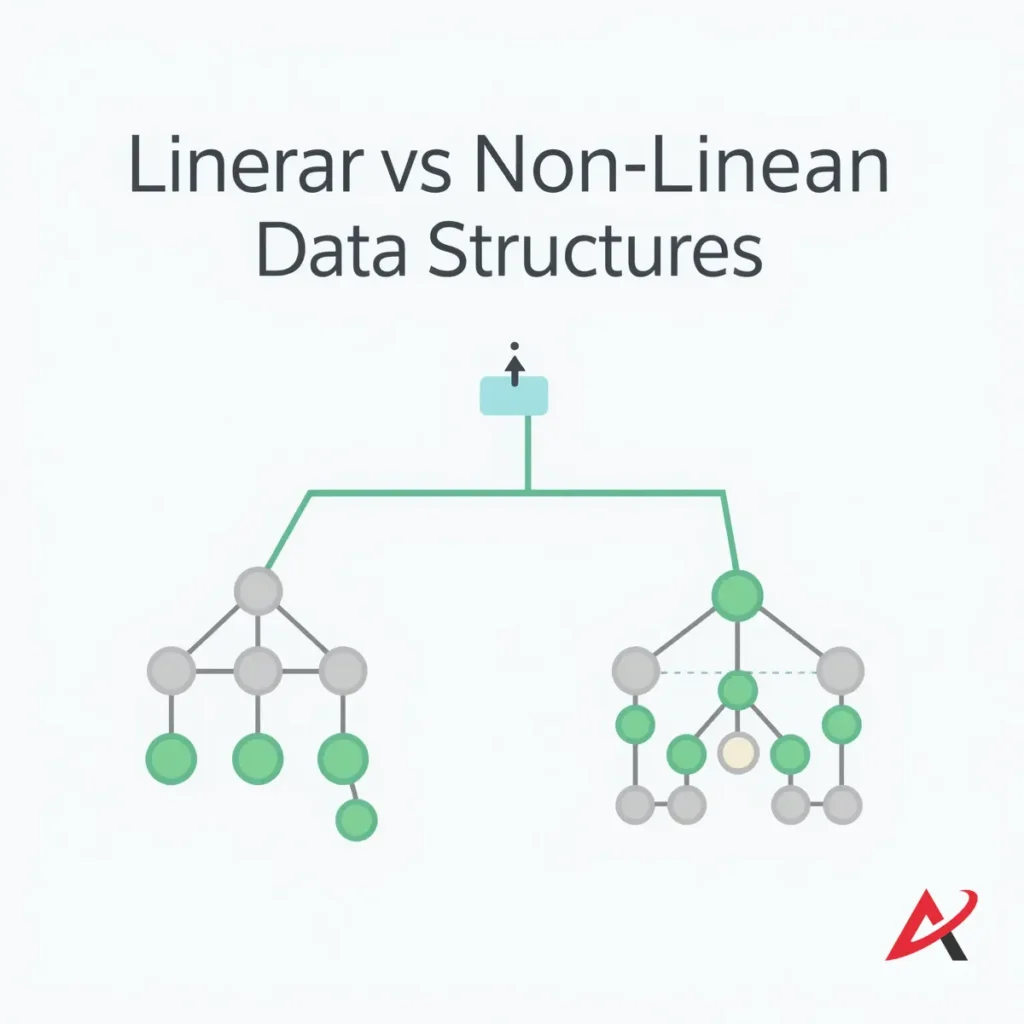
Linear vs Non-Linear Data Structures in DSA
When you start to learn DSA, you will quickly discover that all storage formats fall into one of two primary categories: linear vs non-linear data structures.
Data Structures ├── Linear (Sequential) │ ├── Arrays (Contiguous slots) │ ├── Linked Lists (Connected via pointers) │ ├── Stacks (Last-In, First-Out) │ └── Queues (First-In, First-Out) └── Non-Linear (Hierarchical/Networked) ├── Trees (Parent-child nodes) └── Graphs (Interconnected vertices)Linear Data Structures
In a linear structure, data elements are arranged in a sequential order. Each element has a distinct previous and next neighbor, making them easy to traverse step-by-step.
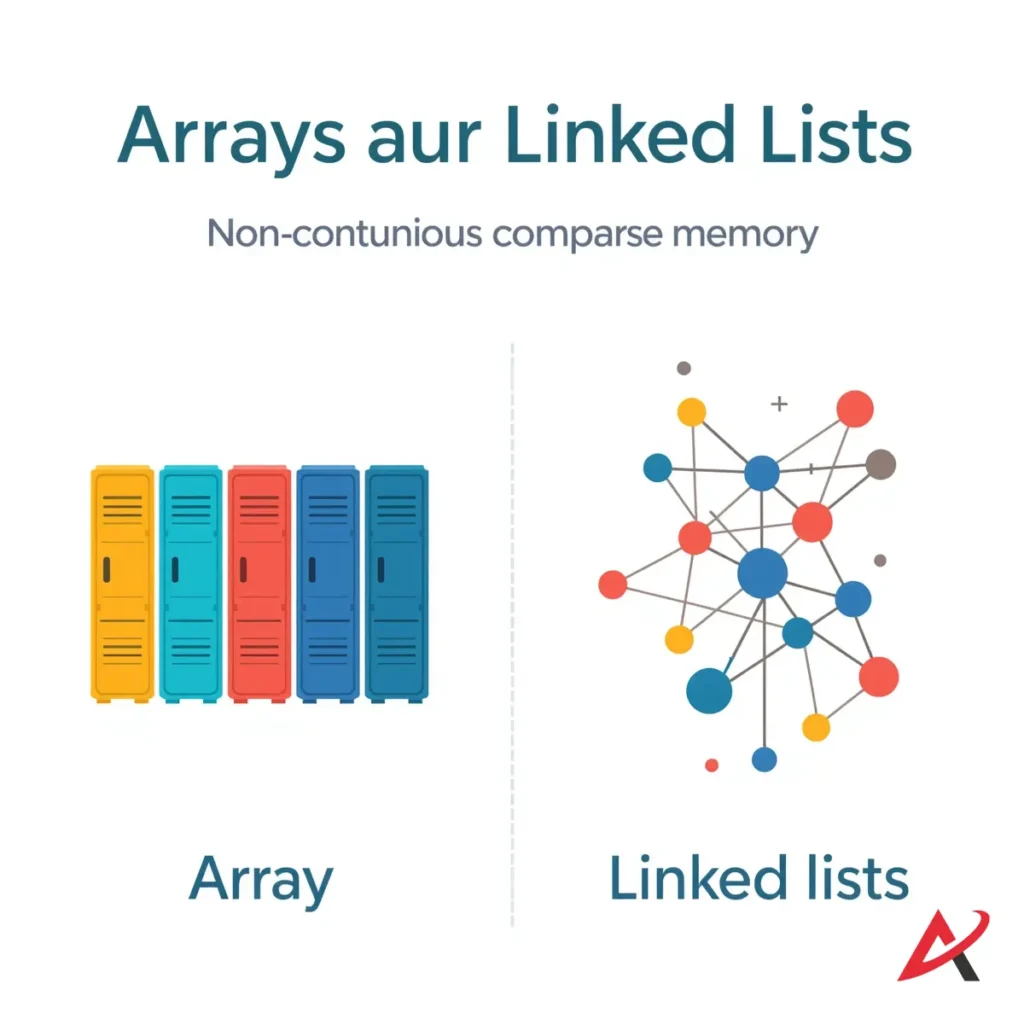
- Arrays: A fixed-size collection of data items stored in contiguous memory blocks. Think of an array like a row of reserved lockers. If you know the locker number (the index), you can open it instantly.
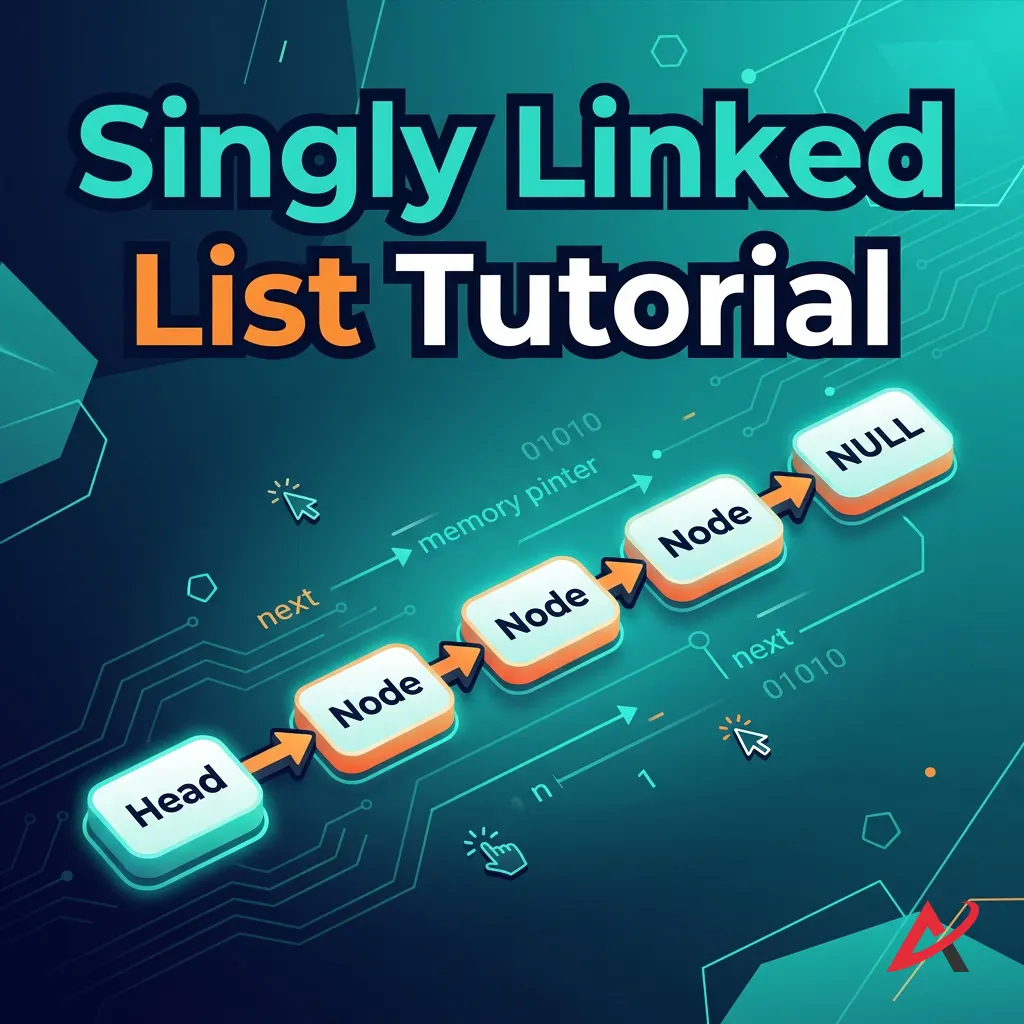
- Linked Lists: Unlike arrays, elements in a linked list are scattered all over your memory. Each element (called a node) holds its actual data value along with a pointer pointing to the address of the next node in line. It’s like a digital scavenger hunt.
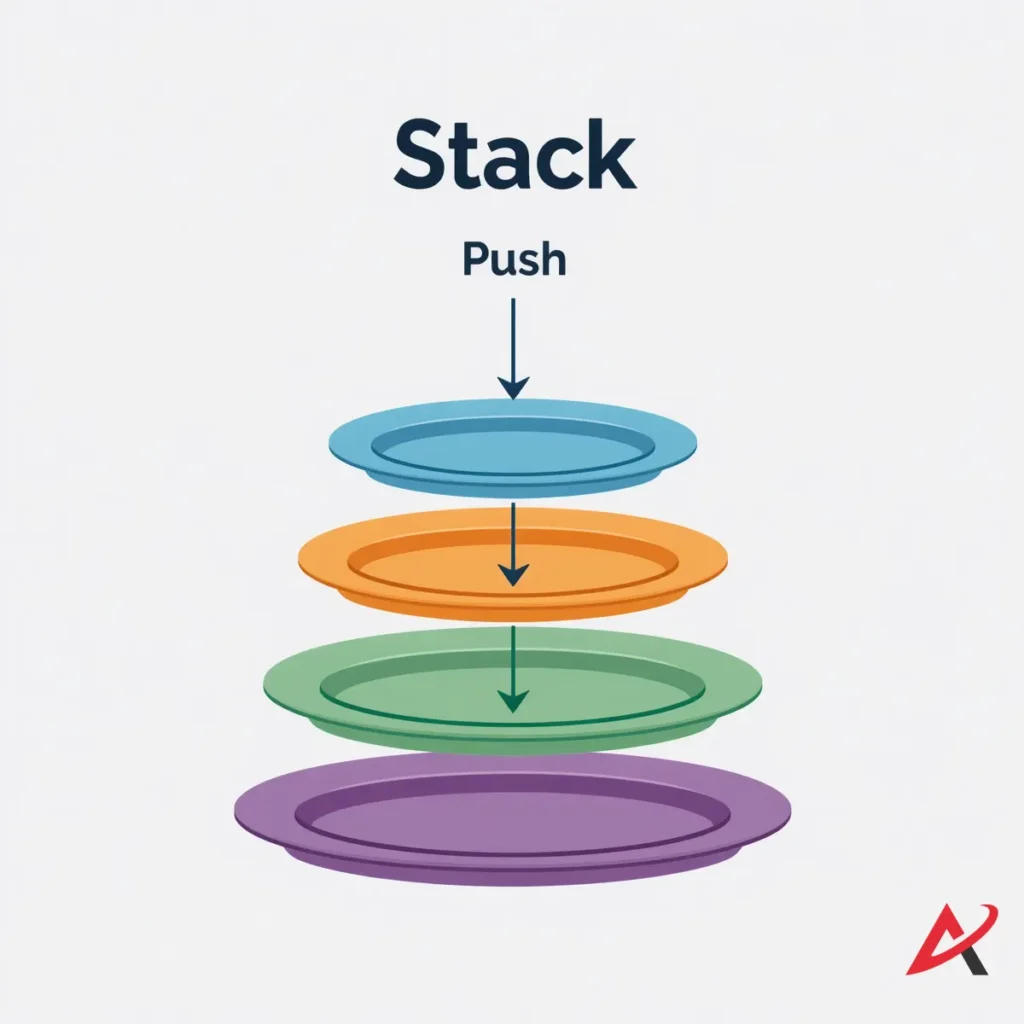
- Stacks: A structure that follows the Last-In, First-Out (LIFO) model. Think of a stack of dinner plates in a cafeteria; you always add new plates to the top, and you pull the top plate off first. The undo button in your text editor relies entirely on a stack.
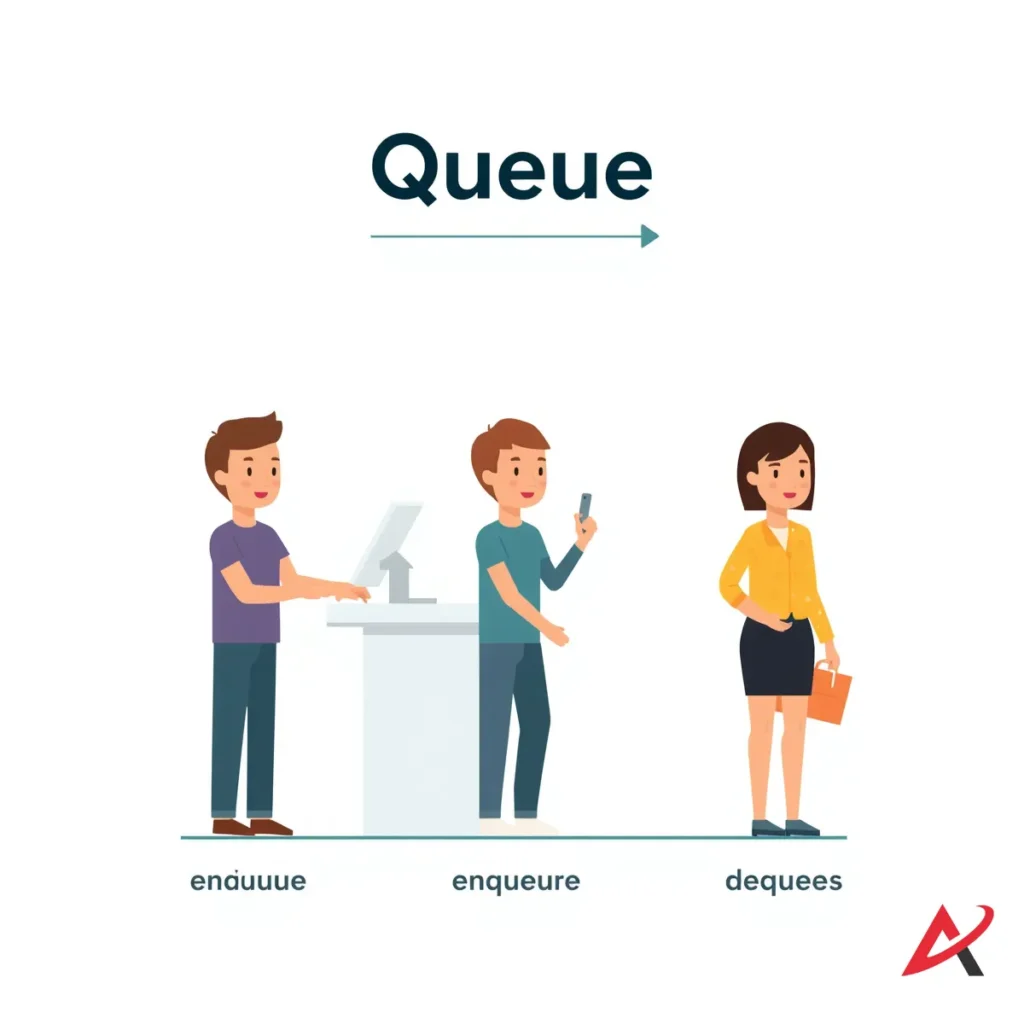
- Queues: This format follows the First-In, First-Out (FIFO) approach. It operates exactly like a real-world queue at a coffee shop; the first person to get in line is the first person served. Printers use queues to handle print jobs in the order they arrive.
Non-Linear Data Structures
When data relationship complexities grow, sequential paths break down. Non-linear arrangements connect elements hierarchically or across interconnected webs.
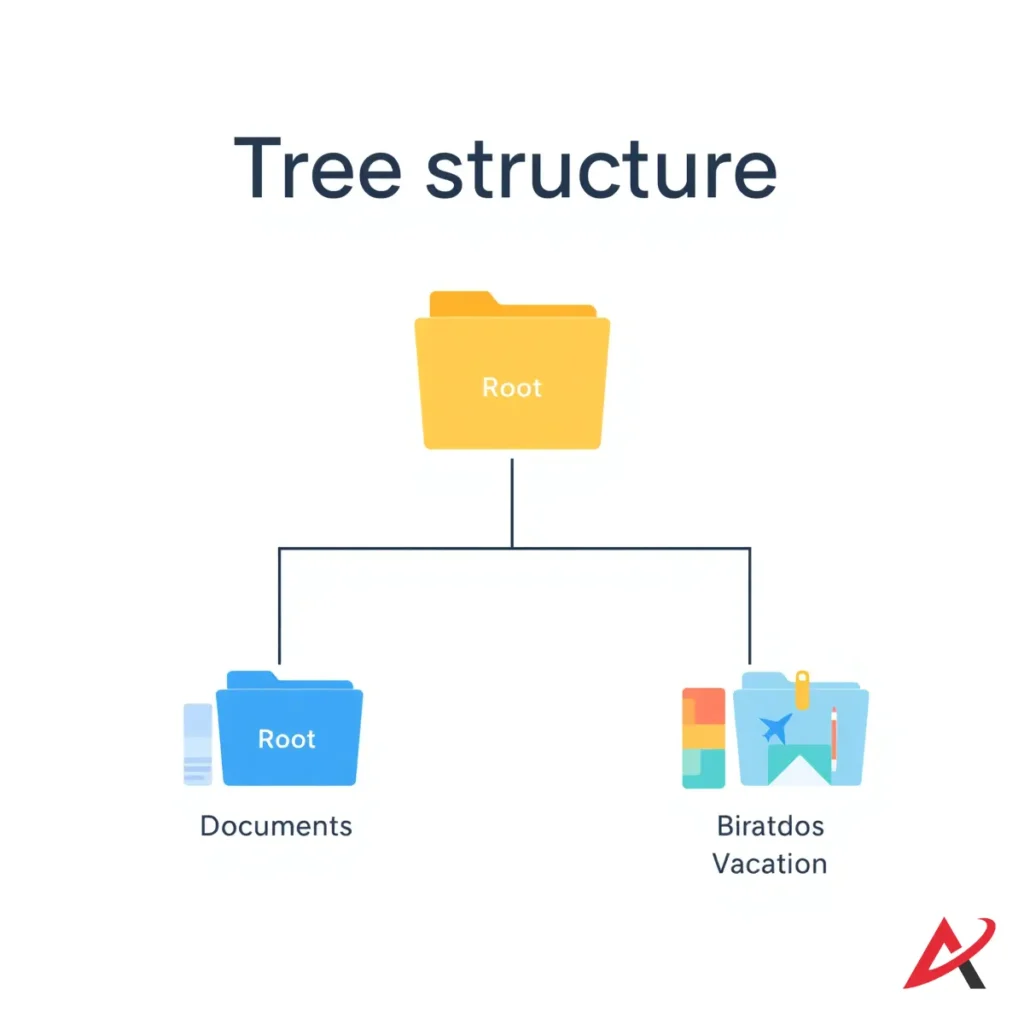
- Trees: A multi-level structure that begins with a single “root” node, which splits into parent and child relationships. Your operating system’s file directory (where a hard drive contains folders, which hold subfolders, which hold files) is a classic tree structure.
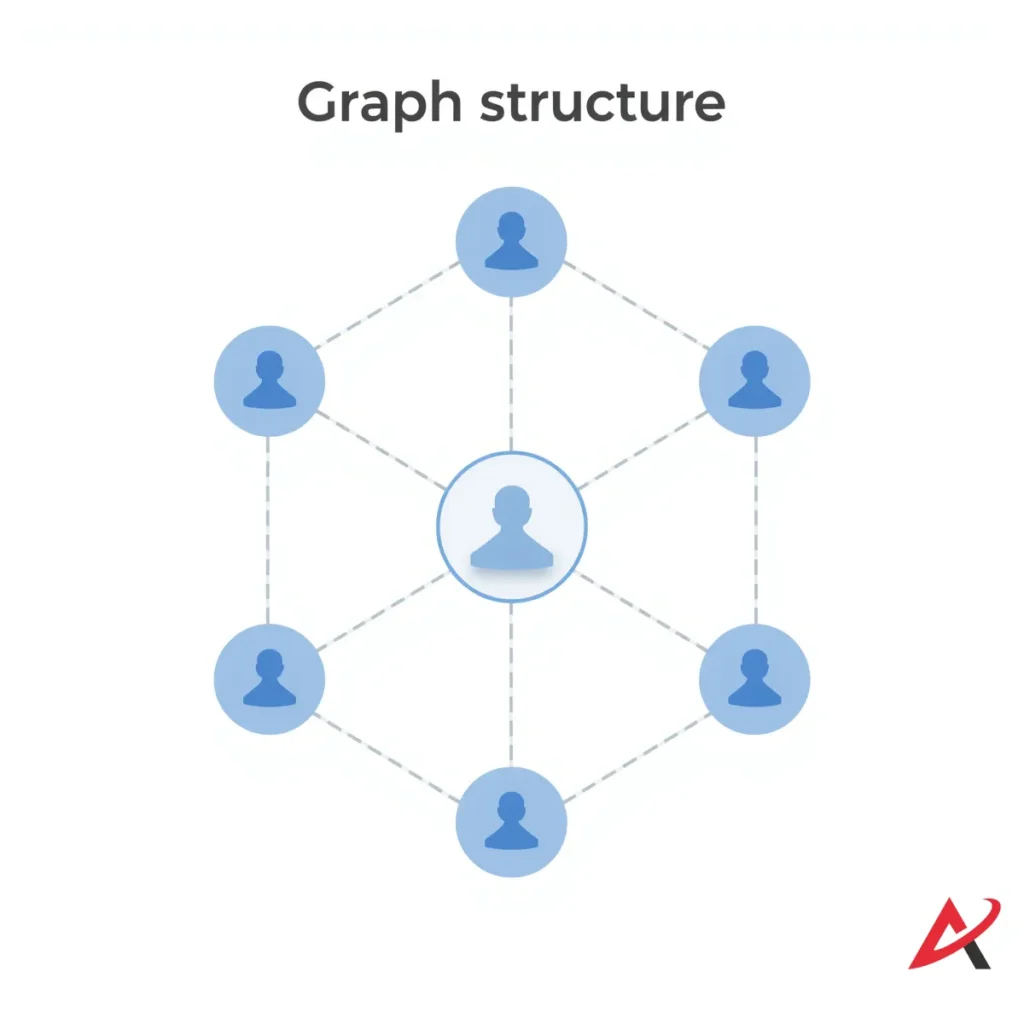
- Graphs: A complex network of data points called vertices, connected by lines called edges. Social networks use graphs to map friendships, where each person is a vertex, and every friendship is an edge connecting them. Google Maps uses advanced data structures like graphs to calculate the quickest paths between cities.
What Are Algorithms in DSA?
An introduction to algorithms starts with a simple truth: computers are exceptionally powerful, but they are also profoundly literal. They cannot guess. An algorithm is a rigorous, deterministic, finite sequence of instructions written to solve a specific problem.
To write an effective algorithm, your logic must be entirely independent of the programming language you use. Whether you write the logic in Python, Java, C++, or Go, the core steps must remain identical. A premium is placed on three traits: correctness (does it always give the right answer?), finiteness (does it eventually stop running?), and efficiency (does it complete the task using minimal resources?).
Common Algorithms in Data Structures and Algorithms
As you progress through a DSA tutorial, you will spend a significant amount of time studying the common algorithms in computer science. These are the time-tested strategies developed by pioneering engineers to solve classic logic challenges.
- Searching Algorithms: These methods scan a data structure to locate a specific target value. This includes Linear Search (checking every single item from start to finish) and Binary Search (a highly efficient strategy that repeatedly cuts a sorted list in half until the target is found).
- Sorting Algorithms: These algorithms arrange data into a specific order, such as numerical or alphabetical sequence. Examples range from simple, hobbyist methods like Bubble Sort to industrial-grade, highly optimized strategies like Merge Sort and Quick Sort.
- Recursion: A programming concept where a function solves a problem by calling a smaller instance of itself. It allows you to break down overwhelming, multi-layered challenges into elegant, repeatable loops of logic.
Big O Complexity Analysis
How do we actually prove that one algorithm design is objectively superior to another? We use a mathematical framework called Big O notation.
When performing a Big O complexity analysis, we do not measure performance in literal minutes or seconds. Why? Because a script running on a 2026 top-tier gaming rig will finish faster than the same script running on a ten-year-old laptop. Instead, Big O measures how the execution time or memory footprint scales as the size of the input data grows toward infinity.
- Time Complexity: An analysis of how the number of operations grows relative to input size.
- Space Complexity: An analysis of how much extra memory or buffer space the algorithm requires to finish its work.
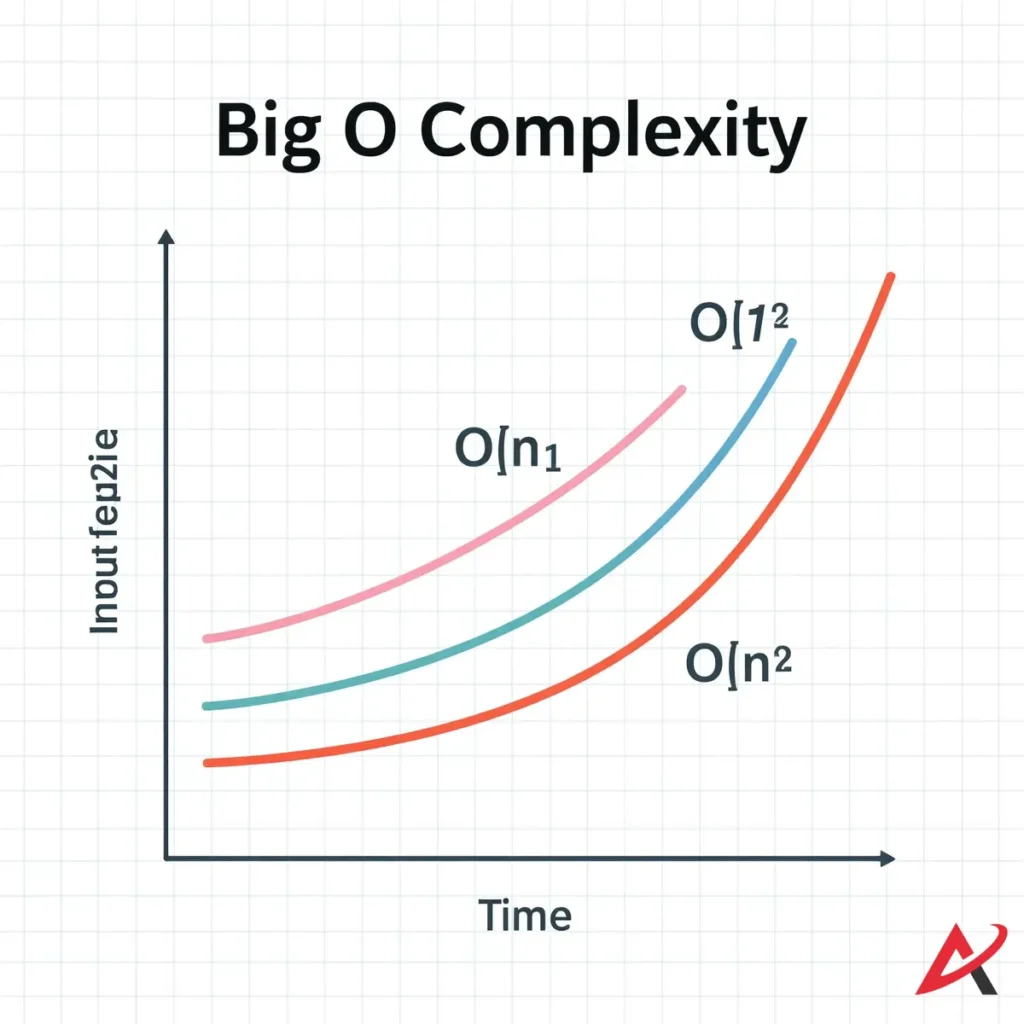
As seen in the complexity chart, as your element count scales upward, different time complexities diverge dramatically. Let’s look at the main Big O classifications you’ll run into when applying algorithm optimization techniques:
- O(1) – Constant Time: The holy grail of efficiency. The algorithm takes the same number of steps whether it is processing 5 items or 5 million items (e.g., looking up an array element by its index).
- O(log n) – Logarithmic Time: Highly efficient. The algorithm cuts the remaining workload in half with every single step it takes (e.g., Binary Search).
- O(n) – Linear Time: The processing time scales in a direct, one-to-one relationship with the size of the input dataset. If you double the data, you double the execution time.
- O(n log n) – Linearithmic Time: The standard performance bar for high-quality, modern sorting mechanisms like Merge Sort.
- O(n²) – Quadratic Time: Performance degrades rapidly. This usually happens when you write nested loops (looping through a list inside another loop). While it might run fine on small test sets, it will cause severe performance degradation on production enterprise data.

Why Is DSA Important for Programmers?
Let’s address a common critique floating around modern developer forums: “Why should I care about algorithm basics when my favorite language has a .sort() method built right into it?”
The truth is, relying blindly on built-in language features without understanding what they do under the hood is a recipe for building fragile applications. Understanding why is dsa important for programmers comes down to moving past writing syntax and learning how to build resilient systems.
1. It Completely Rewires Your Problem-Solving Capabilities
When you learn how to reason about code structurally, your approach to problem solving in programming undergoes a permanent upgrade. You stop throwing random fixes at a breaking bug, hoping something sticks. Instead, DSA teaches you to break an abstract problem down into its raw inputs, processing constraints, and edge cases, allowing you to design an intentional solution from day one.
2. Guarding Against Crushing Technical Debt
In a professional setting, bad architectural choices manifest as massive cloud computing bills or sluggish user interfaces.
- DSA for Software Engineers: Enables the creation of backend infrastructure capable of handling millions of concurrent API requests without leaking memory or driving server processors to 100% capacity.
- DSA for Web Developers ensures web applications remain highly responsive by managing complex application states smoothly, optimizing rendering cycles, and preventing client-side scripts from locking up the browser window.
- DSA for App Developers keeps mobile applications fast and lightweight, conserving precious device battery life and minimizing local storage overhead through efficient caching mechanisms.
A generic programmer writes code that works on their local machine. An exceptional software engineer designs code that scales gracefully when ten thousand users hit the database simultaneously.
Benefits of Learning DSA in Technical Interviews
If your goal is to land a role at premier tech organizations like Apple, Microsoft, Amazon, or Google, DSA is not optional; it is the primary metric by which you will be evaluated.
Resume Review➔Initial DSA Screening➔Technical Virtual Onsite (2-3 DSA Rounds)➔System Design➔Offer
Mainstream tech companies rely heavily on coding interviews to assess a candidate’s core engineering aptitude. They don’t use these trick questions because they expect you to write binary search algorithms from scratch on a whiteboard every day. They use them because it reveals how you think under pressure. Can you communicate your logic clearly? Can you analyze a problem’s constraints, recognize optimization opportunities, and accurately compute its time complexity on the fly?
Furthermore, spending time exploring a competitive programming guide or solving algorithmic puzzles on platforms like LeetCode or Codeforces builds immense mental resilience. This rigorous, persistent exposure to complex problem sets ensures that when you face a real-world production crisis, you will possess the analytical clarity required to isolate and resolve the bottleneck quickly. Elevating your skills in coding interview preparation is often the single most effective strategy for unlocking top-tier compensation brackets in tech.
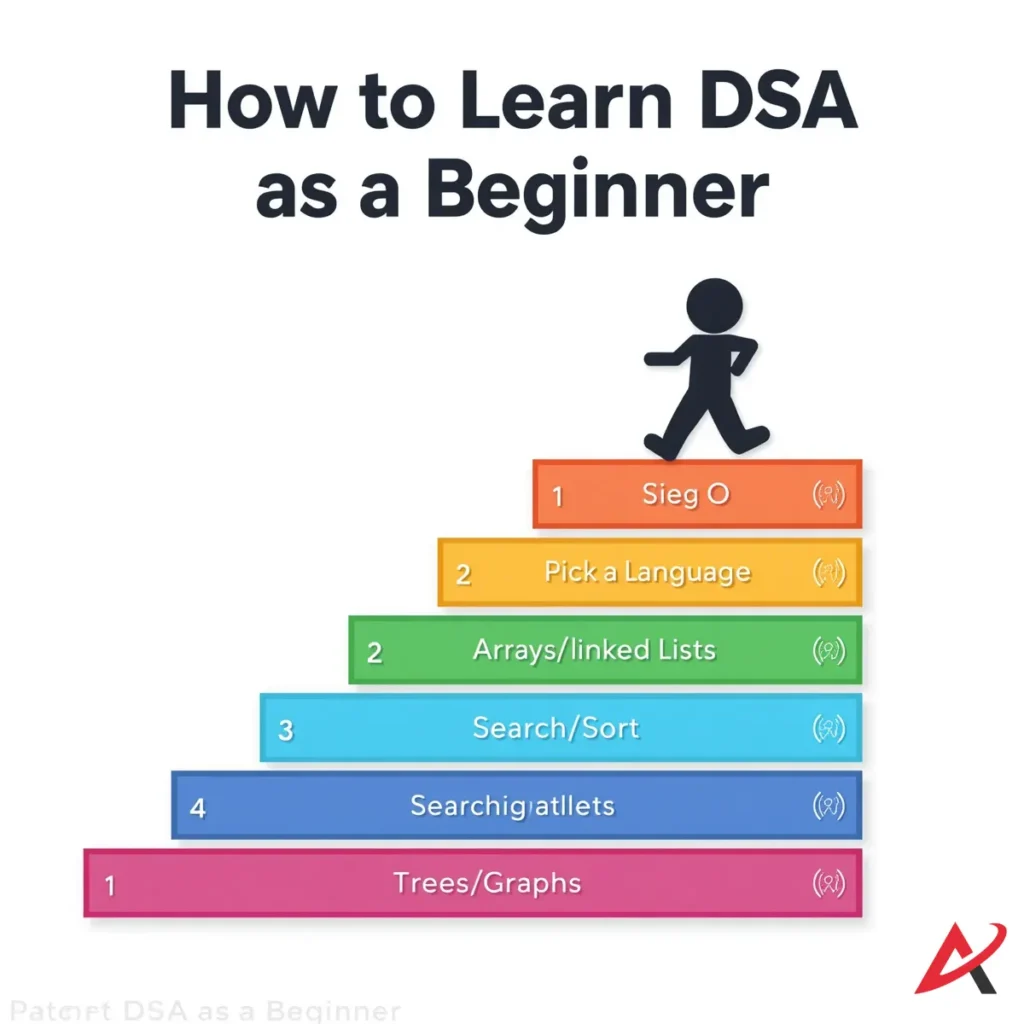
How to Learn DSA as a Beginner (The Roadmap)
If you are trying to figure out how to learn DSA from scratch, diving headfirst into advanced topics like graph traversals or dynamic programming will lead directly to frustration. You need a structured, deliberate path.
The Clear Step-by-Step Prerequisite Path
1. Master One Base Language: Weeks 1 to 3.
Before writing a single algorithm, you must be comfortable with the core fundamentals of a single language (Python, Java, JavaScript, or C++). You need to know how loops, conditional logic, functions, and memory references work inside that language.
2. Understand Complexity Analysis: Week 4.
Learn how to read and calculate Big O notation. This gives you the objective framework required to judge whether your future code solutions are efficient or unacceptably slow.
3. Conquer Linear Structures: Weeks 5 to 8.
Build and manipulate arrays, linked lists, stacks, and queues. Learn how to reverse a linked list or use a stack to validate matching parentheses in a string.
4. Study Core Searching & Sorting: Weeks 9 to 10.
Implement linear search, binary search, bubble sort, and merge sort. Understand the core conceptual shift from an $O(n^2)$ sort to an $O(n \log n)$ sort.
5. Transition to Non-Linear Data Systems: Weeks 11 to 14.
Move into hierarchical arrangements. Study binary trees, binary search trees (BSTs), and graph representations. Learn how to traverse them using depth-first and breadth-first search patterns.
Answering the Common Beginner Roadblocks
- Can I learn DSA without coding experience? Absolutely not. Attempting to learn data structures without a working knowledge of code variables and control loops is like trying to learn advanced physics before you know basic algebra. Get comfortable writing small scripts first.
- How long does it take to learn DSA? For a beginner committing roughly 10 to 15 hours a week of focused practice, it generally takes 3 to 4 months to achieve true comfort with core topics and feel prepared for technical interview screenings.
Choosing the Best Educational Track (Product & Service Guide)
Depending on your individual learning style, financial budget, and immediate career timelines, there are several distinct learning paths available to help you master DSA.
| Tailored DSA interview preparation course layout; personalized mock interviews. | Best Suited For | Key Advantages | Investment Profile |
| Self-Paced Courses | Independent learners with flexible timelines. | Low cost; learn on your own schedule via a targeted dsa tutorial. | Highly Affordable |
| Guided Bootcamps | Career switchers demanding rigid structure. | Intensive accountability; cohort community via a dsa bootcamp. | Mid to High Cost |
| Elite 1-on-1 Coaching | Active job seekers aiming for elite tech roles. | Tailored dsa interview preparation course layout; personalized mock interviews. | Premium Pricing |
- The Self-Guided Route: If you are highly disciplined, you can learn entirely online. You can find an excellent, free online data structures and algorithms course on platforms like Coursera, edX, or YouTube. Pair these video lessons with active coding practice on LeetCode or HackerRank to reinforce your learning.
- The Structured Training Route: If you find yourself struggling to stay consistent on your own, look into a formal DSA training program or enroll in specialized DSA classes for beginners. These environments provide curated curricula that eliminate guesswork, keeping you focused on the highest-leverage concepts.
- The Professional Interview Track: For engineers focused on passing intense technical rounds rapidly, investing in a structured DSA certification course or engaging directly with dedicated DSA coaching can dramatically shorten your timeline. These high-tier pathways focus squarely on pattern recognition, helping you decode complex interview prompts with confidence.
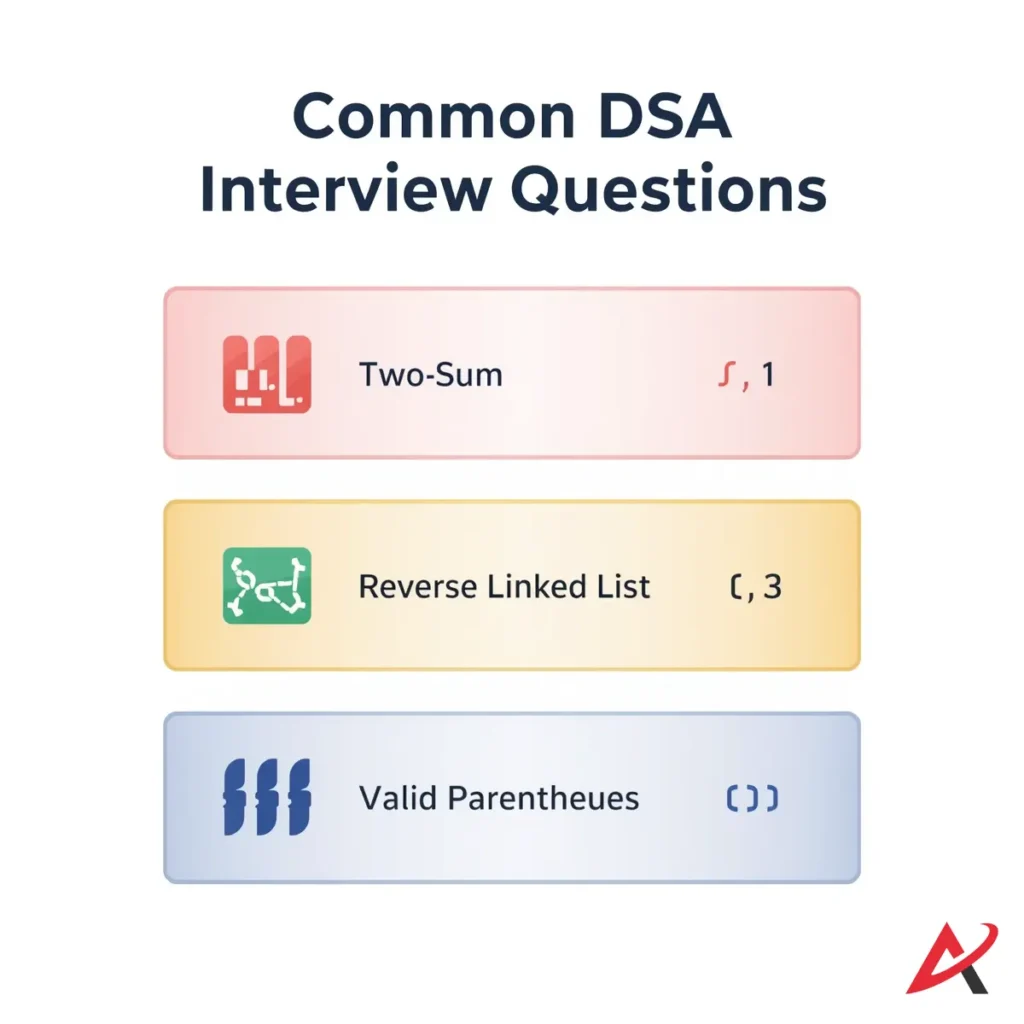
Common DSA Interview Questions
As you step into DSA interview preparation for beginners, you will notice that thousands of distinct technical interview challenges are actually subtle variations of a few foundational problem types. Mastering these patterns is the secret to interview success.
Array Problems➔Two-Pointer Technique / Sliding Window
List Problems➔Fast and Slow Pointer (Cycle Detection)
Tree Problems➔Level-Order Traversal (Breadth-First Search)
Here are some of the highest-frequency fundamental question types you will encounter across initial technical screenings:
- Two-Sum Problem (Arrays/Hashing): Given an array of integers, find two numbers that add up to a specific target value. This tests your ability to optimize from a slow $O(n^2)$ nested loop approach to a highly efficient $O(n)$ strategy using a Hash Map.
- Reverse a Linked List (Linear Structures): A classic test of pointer manipulation. It evaluates how well you understand memory addresses and references without losing track of your data chain.
- Valid Parentheses (Stacks): Given a string containing just the characters
(,),{,},[, and], Determine if the input string is valid. This problem tests your ability to apply the Last-In, First-Out properties of a stack. - Binary Tree Level-Order Traversal (Trees): Requires you to visit every single node in a tree level by level. This requires implementing a queue structure to execute a clean Breadth-First Search (BFS).
Quick Summary / Key Takeaways
- Data structures manage the physical and logical layout of your data, while algorithms provide the deterministic, step-by-step logic to transform or retrieve it.
- Big O notation is the universal metric used to evaluate code scalability. It measures how time and memory requirements grow relative to data volume, rather than relying on raw clock execution speeds.
- Choosing the right data layout is a matter of managing trade-offs. Linear options like arrays provide instant lookup speeds but possess fixed sizing boundaries, whereas non-linear variants like graphs map intricate, sprawling networks effortlessly.
- Mastering DSA is the single most effective way to excel in competitive programming and ace modern coding interviews at premier technology firms.
Conclusion
Data Structures and Algorithms can feel incredibly intimidating when you first look at the abstract theory, the mathematical proofs, and the complex diagrams. It is easy to view it as just another annoying obstacle you have to get through to clear a technical job interview.
But if you shift your perspective, you will realize that learning DSA is the exact point where you stop writing basic scripts and start practicing true software engineering. It grants you the deep architectural insight required to look at a slow, breaking system, diagnose its foundational bottlenecks, and write clean, elegant solutions that scale effortlessly.
Stop passively reading through tutorials. Open up your favorite integrated development environment (IDE), select a basic array problem, manually code your very first solution from scratch, and watch your problem-solving abilities unlock in real-time.
FAQs
What does DSA stand for?
DSA stands for Data Structures and Algorithms in coding, and Digital Subtraction Angiography in medical terms.
What is DSA in coding?
DSA means Data Structures and Algorithms, used to organize data and solve problems efficiently in programming.
What is DSA in health?
DSA in health usually means Digital Subtraction Angiography, a test to see blood vessels clearly.
What does DSA stand for medically?
Medically, DSA stands for Digital Subtraction Angiography, an imaging technique for blood vessels.
What is a DSA medical procedure?
It is an X-ray-based procedure where dye is injected to check blood flow in arteries and veins.
What is DSA in disability?
DSA stands for Disabled Students Allowance, financial/help support for students with disabilities.
Related Blogs
Time Complexity and Big O Notation Explained Like You’re 10 Years Old