
Now Reading: How to Start Freelancing in the USA With No Experience: The Beginner’s Blueprint for 2026
- 01
How to Start Freelancing in the USA With No Experience: The Beginner’s Blueprint for 2026
How to Start Freelancing in the USA With No Experience: The Beginner’s Blueprint for 2026

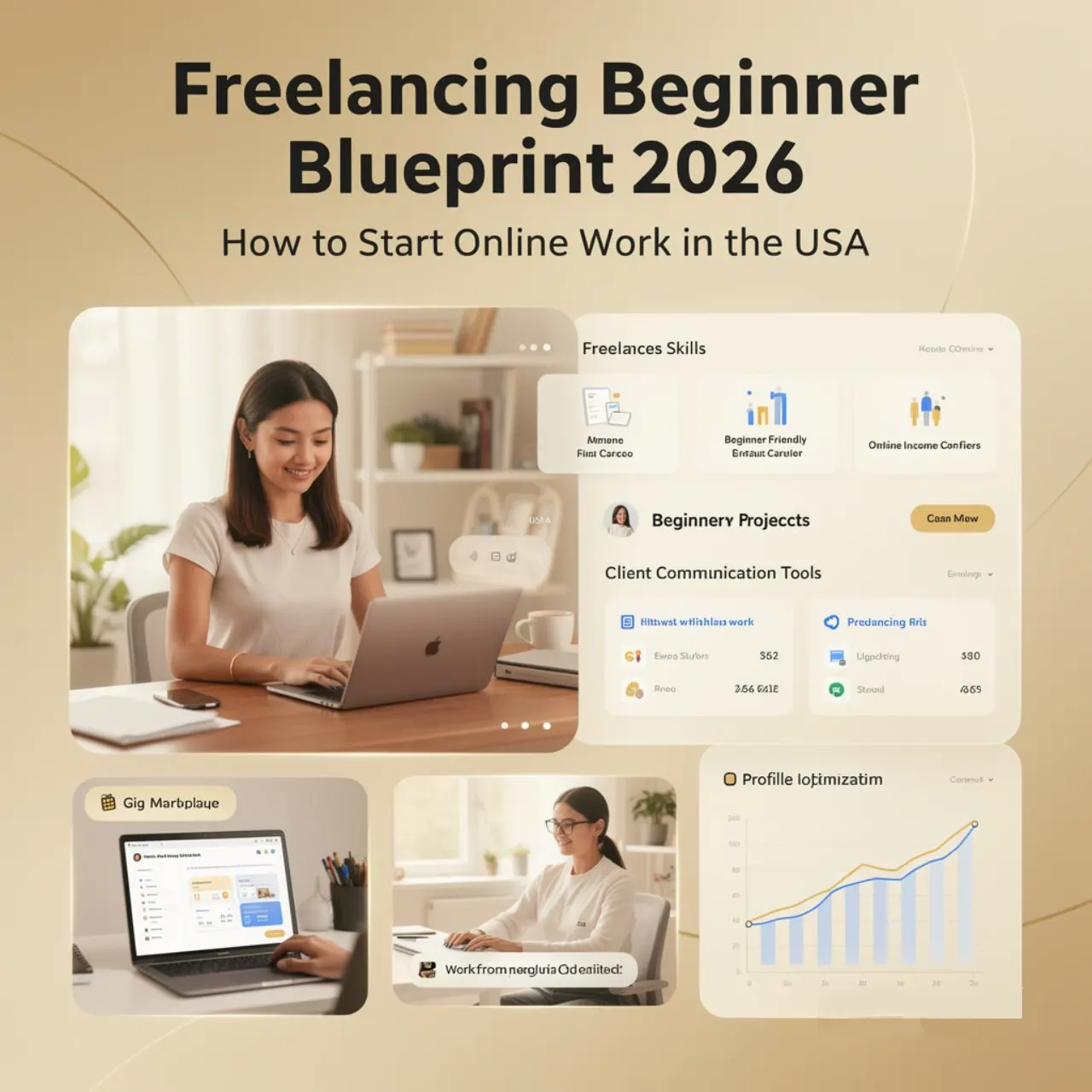
How to Start Freelancing in the USA With No Experience.
The Beginner’s Blueprint for 2026 helps beginners learn freelance skills, find clients, and earn online. The freelance economy in the United States is expanding faster than most traditional industries. Businesses are reducing full-time hiring costs, startups are outsourcing specialized tasks, and remote work has become a normal part of modern business culture. In 2026, freelancing is no longer viewed as a side hustle reserved for experienced professionals. It has become a legitimate career path for students, beginners, stay-at-home parents, and anyone willing to learn valuable digital skills.
One uncomfortable truth many beginners ignore is this: most freelancers fail not because they lack talent, but because they wait too long to start. They spend months consuming motivational videos instead of building practical skills, creating sample projects, and contacting real clients. The internet has removed many of the barriers that once prevented beginners from entering the market. Today, a person with zero experience can learn a skill online, build a portfolio within weeks, and start getting paid through global freelance platforms.
Artificial intelligence, remote collaboration tools, and online marketplaces have opened opportunities that did not exist a few years ago. Businesses now need freelance writers, AI content editors, social media managers, video editors, graphic designers, website developers, virtual assistants, and automation specialists. Many companies prefer freelancers because remote hiring reduces overhead and increases flexibility.
This complete guide, How to Start Freelancing in the USA With No Experience: The Beginner’s Blueprint for 2026, will explain exactly how beginners can enter freelancing from scratch. You will learn how freelancing works, which skills are profitable, how to build a portfolio without clients, how to get your first job, what mistakes to avoid, and how to create a realistic 30-day action plan.
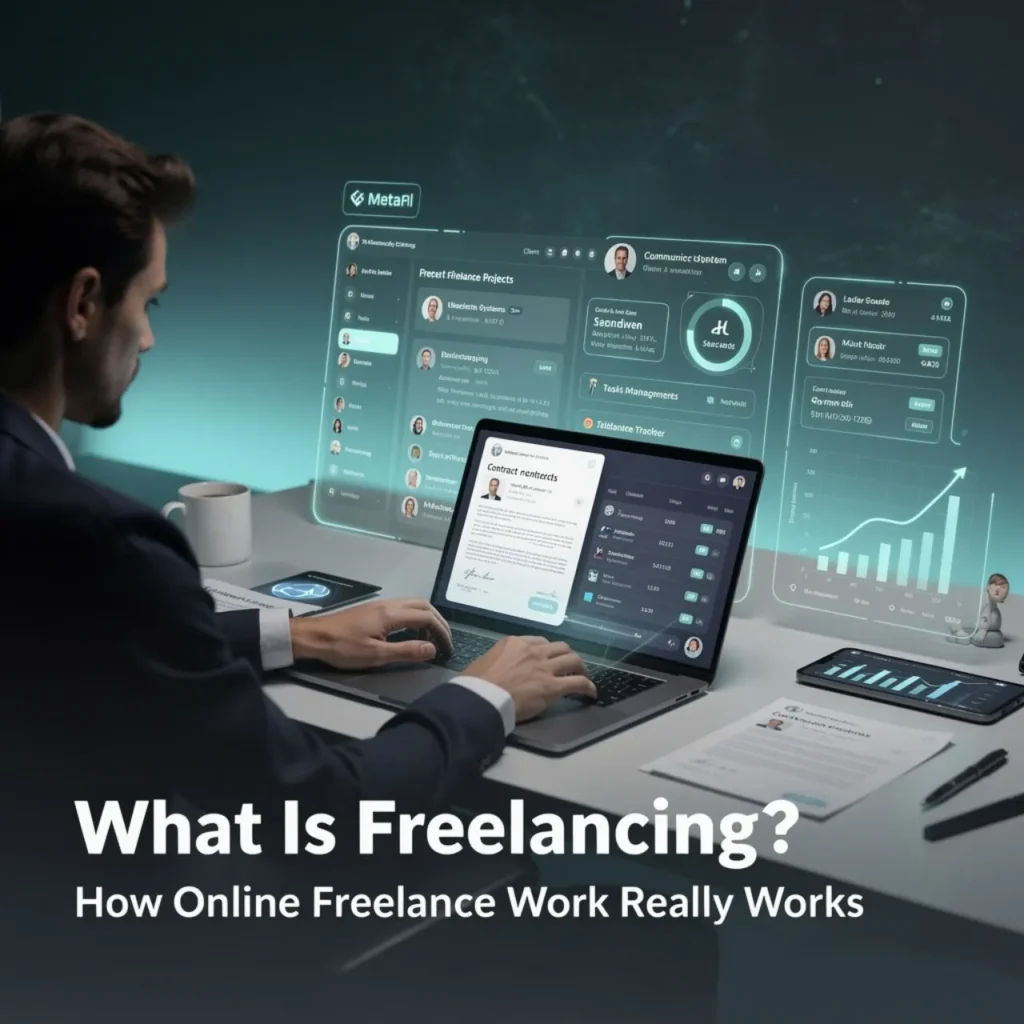
What Is Freelancing and How Does It Work?
Definition of Freelancing
Freelancing means working independently instead of being employed permanently by one company. A freelancer provides services to multiple clients on a project basis, an hourly basis, or a long-term contract.
Unlike traditional jobs, freelancers control their schedule, pricing, workload, and clients. They can work from home, coffee shops, coworking spaces, or anywhere with internet access.
A freelance writer may create blog posts for five different companies. A graphic designer may design logos for startups worldwide. A website developer may build online stores for small businesses. The possibilities are enormous.
How Freelancers Make Money
Freelancers typically earn money in four ways:
| Payment Model | Description |
| Hourly Rate | Clients pay per hour worked |
| Fixed Projects | Payment for completing a project |
| Retainers | Monthly ongoing payments |
| Commission-Based | Earnings tied to performance |
Many beginners start with lower-priced projects to build credibility. As skills improve, rates increase.
Popular Freelance Industries in 2026
Several freelance sectors are growing rapidly in 2026:
- Content Writing
- Graphic Design
- Video Editing
- AI Content Optimization
- Social Media Management
- Website Development
- SEO Services
- Virtual Assistance
- Digital Marketing
- Automation Services
The strongest opportunities exist in industries connected to online business growth and AI integration.
Difference Between Freelancing and Traditional Jobs
Traditional jobs offer stability but often limit freedom and income growth. Freelancing provides flexibility and unlimited earning potential but requires discipline and self-management.
| Freelancing | Traditional Jobs |
| Flexible schedule | Fixed schedule |
| Unlimited income potential | Fixed salary |
| Multiple clients | One employer |
| Remote opportunities | Office-based in many cases |
| Requires self-discipline | Structured environment |
Many beginners underestimate the responsibility freelancing demands. Nobody forces freelancers to work. Nobody guarantees income. Success depends heavily on consistency.
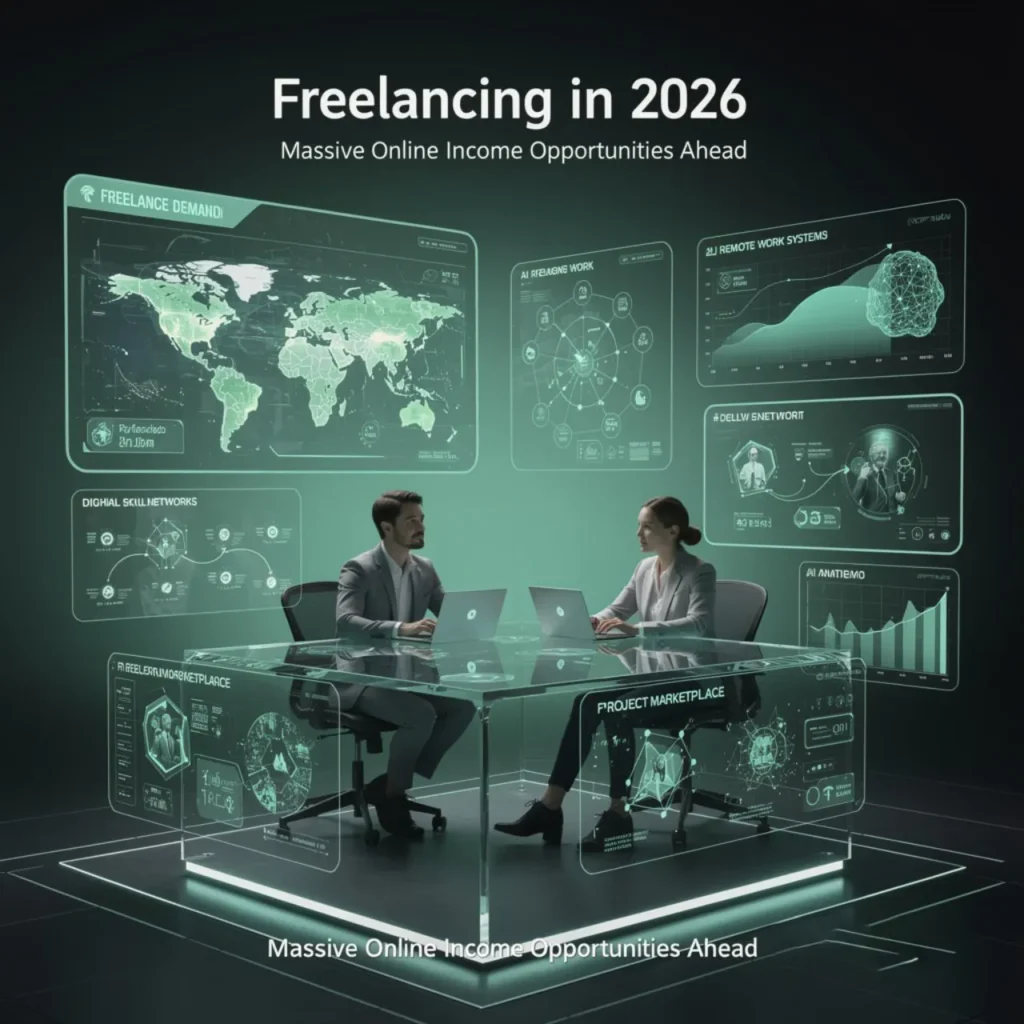
Why Freelancing Is a Huge Opportunity in 2026
Rise of Remote Work in the USA
Remote work permanently changed how businesses operate. Companies now hire globally instead of locally. This creates opportunities for beginners worldwide to work with U.S.-based clients.
Employers increasingly care more about results than degrees or office attendance.
Companies Hiring Freelancers More Than Employees
Businesses often prefer freelancers because:
- They reduce payroll costs
- They avoid employee benefits expenses
- They can hire specialists temporarily
- They scale projects faster
This trend continues growing in 2026, especially among startups and online businesses.
AI and Online Business Growth
Artificial intelligence has created new service categories. Businesses now need freelancers who understand:
- AI content editing
- Prompt engineering
- AI-assisted design
- Chatbot management
- Automation workflows
Many beginners fear that AI will replace freelancers. The opposite is happening. AI is replacing low-skill workers while increasing demand for adaptable freelancers who know how to use AI effectively.
Low Startup Cost Compared to Businesses
Freelancing has one major advantage over traditional businesses: low startup costs.
You usually only need:
- A laptop
- Internet connection
- A marketable skill
- A portfolio
- Communication tools
Compared to opening a physical business, freelancing is extremely accessible.
Can You Start Freelancing With No Experience?
Why Experience Is Not Mandatory
Clients primarily care about one thing: results.
A beginner who solves problems effectively can compete against experienced freelancers who communicate poorly or deliver low-quality work.
Experience helps, but it is not the only factor clients evaluate.
Skills Clients Actually Care About
Clients usually prioritize:
- Communication
- Reliability
- Fast response times
- Problem-solving
- Quality work
- Professionalism
Many beginners obsess over certificates while ignoring practical execution.
The Truth About Beginner Freelancers
Most successful freelancers started with no experience.
The difference is that they began before feeling fully prepared.
Perfectionism destroys momentum. Many beginners spend six months “planning” instead of sending proposals or building projects.
Common Myths That Stop Beginners
Myth 1: You Need a Degree
False. Most freelance clients care about results, not academic qualifications.
Myth 2: The Market Is Too Competitive
Competition exists everywhere. Weak positioning and poor skills are the real problems.
Myth 3: You Need Expensive Courses
Free resources are enough to begin.
Myth 4: AI Will Replace Freelancers
AI rewards adaptable freelancers while eliminating repetitive, low-value work.
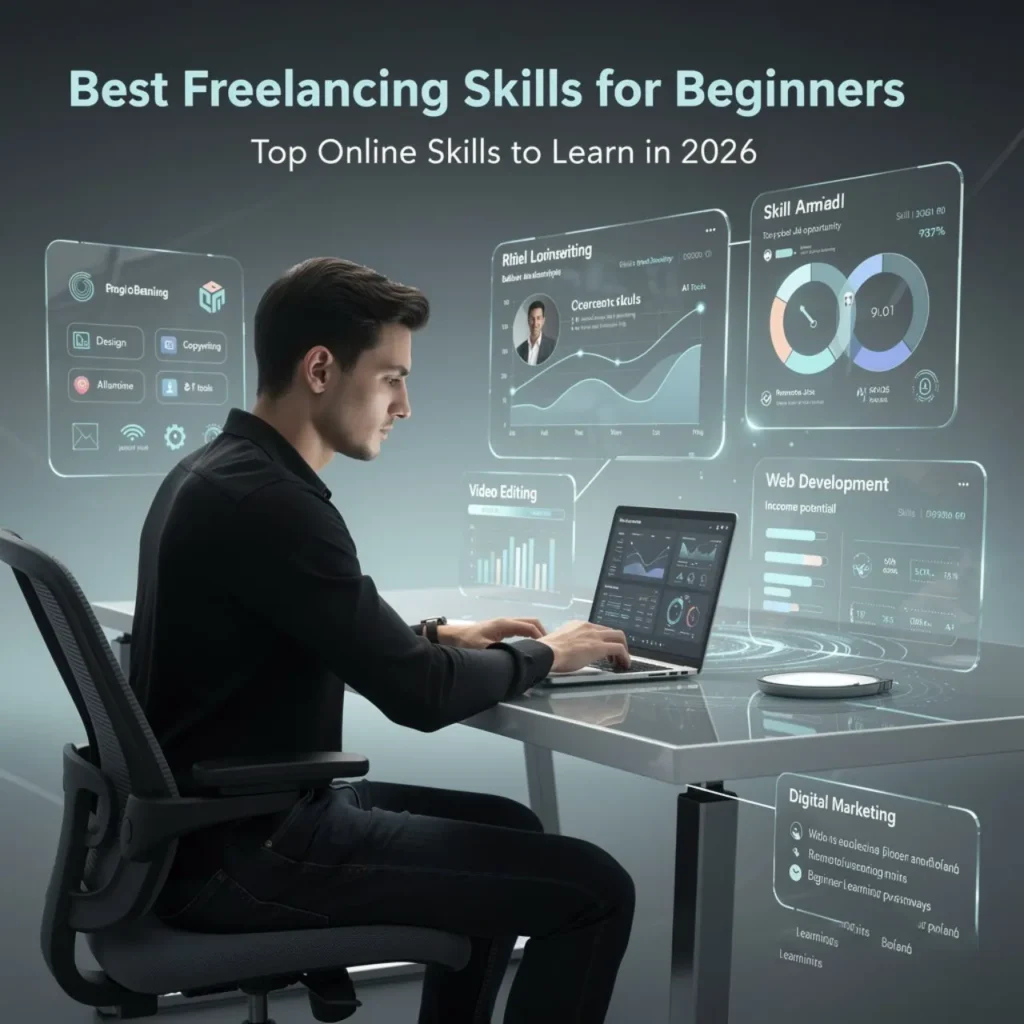
Best Freelancing Skills for Beginners in 2026
Content Writing
Content writing remains one of the easiest freelance skills to start.
Businesses constantly need:
- Blog posts
- Product descriptions
- SEO articles
- Website content
- Email newsletters
Writers who understand SEO and user intent have strong earning potential.
Graphic Design
Graphic design services include:
- Logo design
- Social media graphics
- Branding materials
- Thumbnails
- Advertisements
Tools like Canva and AI-assisted design software lowered the entry barrier for beginners.
Video Editing
Short-form content dominates social media platforms.
Businesses need editors for:
- TikTok videos
- YouTube Shorts
- Instagram Reels
- Podcasts
- Promotional videos
Video editing demand continues to grow rapidly.
Social Media Management
Brands struggle to maintain a consistent online presence. Social media managers help businesses grow audiences and engagement.
Tasks include:
- Content scheduling
- Caption writing
- Analytics tracking
- Engagement management
AI-Powered Services
AI-related freelancing opportunities are exploding.
Examples include:
- AI content enhancement
- Prompt writing
- Workflow automation
- AI image generation
- Chatbot setup
Freelancers who combine AI tools with human creativity gain major advantages.
Website Development
Website development remains highly profitable because businesses always need websites.
Beginners can start with:
- WordPress
- Shopify
- Webflow
- Basic HTML/CSS
You do not need to become an advanced programmer immediately.
Best Freelance Skills Without a Degree to Make Money Online in 2026
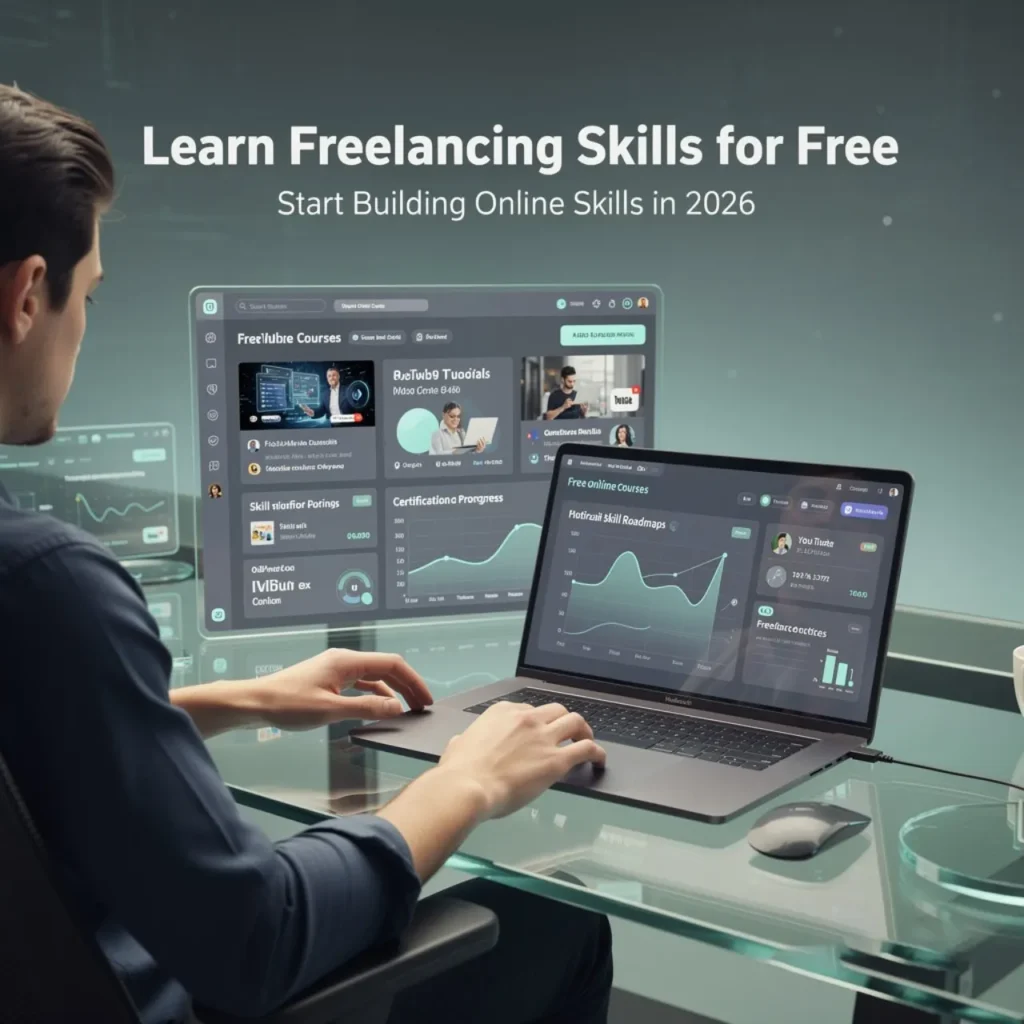
How to Learn Freelancing Skills for Free
Free Learning Platforms
Several platforms offer free education:
| Platform | Best For |
| YouTube | Tutorials |
| Coursera | Structured courses |
| freeCodeCamp | Coding |
| HubSpot Academy | Marketing |
| Canva Design School | Design basics |
Most paid courses simply reorganize information already available online.
YouTube Learning Strategy
Random learning creates confusion. Beginners should focus on one skill and one learning path.
A practical strategy:
- Choose one skill
- Watch beginner tutorials
- Practice daily
- Create projects immediately
- Avoid endless consumption
Learning without implementation is procrastination disguised as productivity.
Practice Projects for Beginners
Beginners should create fake projects to simulate real work.
Examples:
- Design social media posts for imaginary brands
- Write blog posts for sample businesses
- Edit practice videos
- Build demo websites
Clients care more about visible work than excuses about a lack of experience.
Building Skills in 30 Days
Thirty focused days can create basic competency.
Consistency matters more than intensity.
A beginner practicing two focused hours daily often outperforms someone studying randomly for six months.
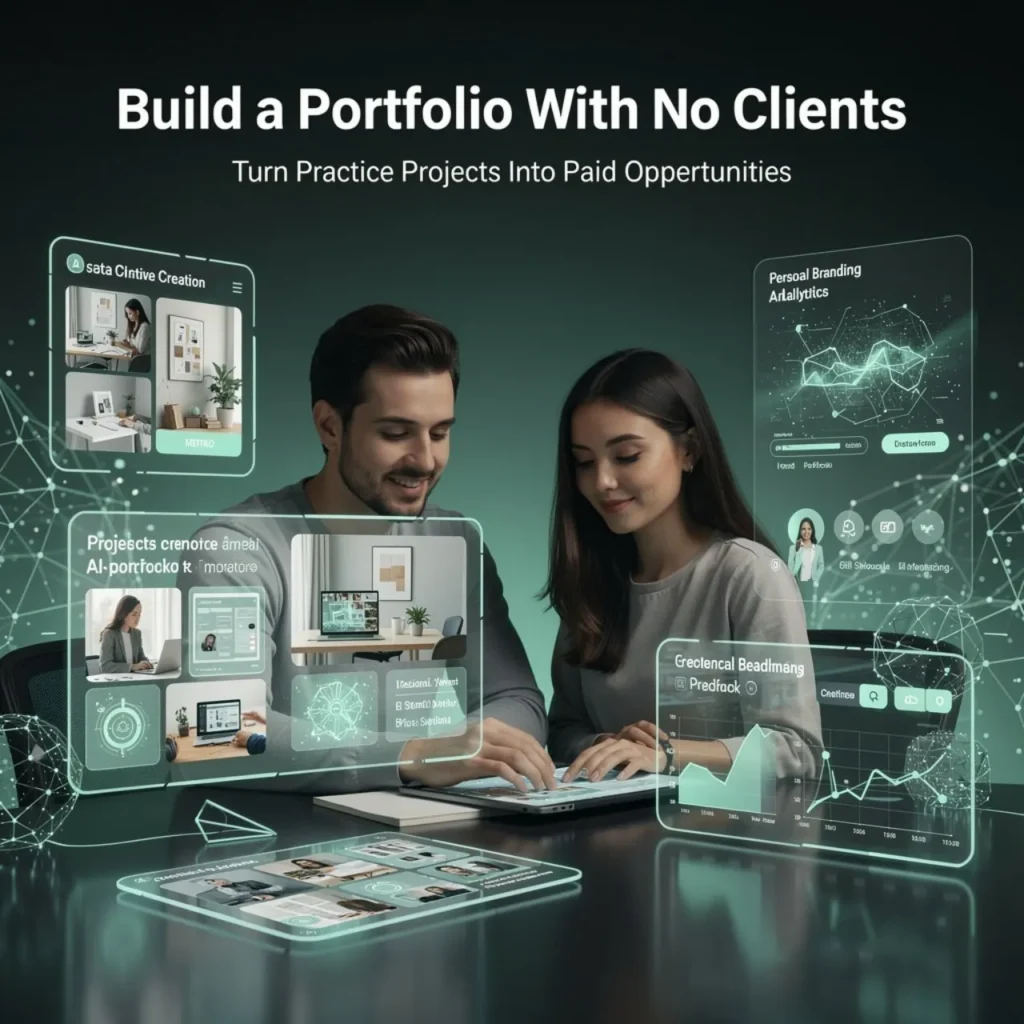
How to Build a Portfolio With No Clients
Creating Sample Projects
A portfolio proves capability.
Beginners should create:
- Writing samples
- Demo websites
- Branding projects
- Edited videos
- Social media campaigns
No client is required to start building.
Using Mock Client Work
Pretend companies exist and create work for them.
Example:
- Build a fake restaurant website
- Create branding for an imaginary clothing brand
- Write SEO content for a mock fitness blog
This demonstrates initiative and skill.
Personal Branding Tips
Your online presence matters heavily in freelancing.
Important elements include:
- Professional profile picture
- Clear service description
- Strong portfolio
- Consistent social media branding
Beginners who appear professional gain trust faster.
Portfolio Mistakes Beginners Make
Common mistakes include:
- Poor presentation
- Too many low-quality samples
- Copying other freelancers
- Using generic descriptions
Quality always beats quantity.
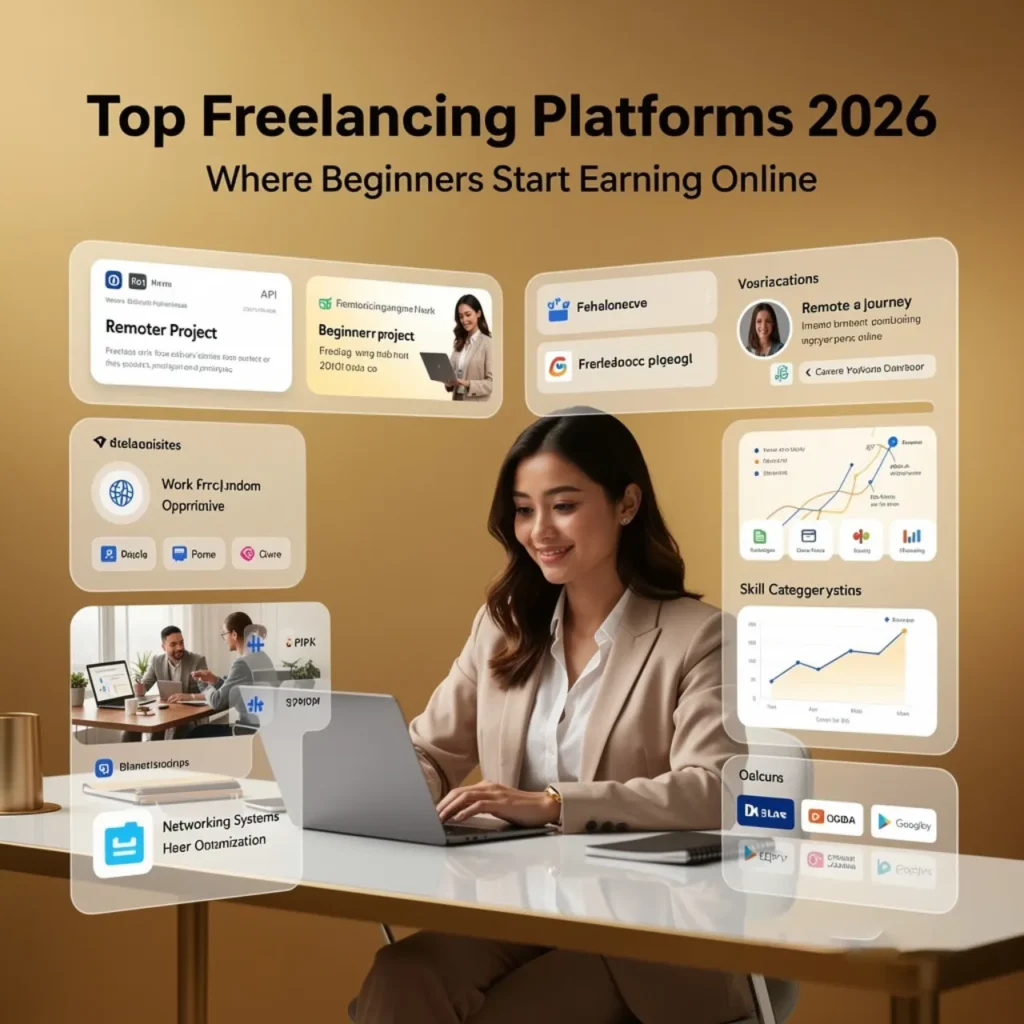
Best Freelancing Platforms for Beginners
Upwork
Upwork is one of the largest freelance marketplaces.
Best for:
- Long-term projects
- Professional clients
- Higher-paying contracts
Competition is intense, but opportunities are massive.
Fiverr
Fiverr allows freelancers to create service listings called gigs.
Best for:
- Beginners
- Quick projects
- Service packages
Strong gig optimization is critical.
Freelancer
Freelancer.com offers projects across multiple industries.
Beginners can find smaller projects to gain initial experience.
PeoplePerHour
PeoplePerHour focuses heavily on creative and digital services.
The platform is competitive but useful for skilled freelancers.
Contra and New Platforms
Contra is gaining popularity because it avoids heavy freelancer fees.
Newer platforms often provide less competition than older marketplaces.
How to Get Your First Freelance Client
Writing Winning Proposals
Most beginner proposals fail because they sound generic.
Bad proposal example:
I am interested in your project.
Strong proposals focus on solving problems.
A better structure:
- Address the client directly
- Mention their problem
- Explain your solution
- Show relevant samples
- End with a clear call to action
Finding Beginner-Friendly Jobs
Beginners should target:
- Small businesses
- Startups
- Local companies
- Short-term projects
Large corporate contracts are harder initially.
Networking on Social Media
Platforms like:
- X
can help freelancers attract clients organically.
Posting valuable content builds credibility over time.
Cold Outreach Strategies
Cold outreach still works when done properly.
A simple strategy:
- Find businesses with a weak online presence
- Identify specific problems
- Offer practical solutions
- Keep messages short
Most beginners fail because they send spam instead of personalized outreach.
Freelancing Mistakes Beginners Must Avoid
Charging Too Little
Extremely low pricing attracts difficult clients.
Cheap clients often demand more work while respecting freelancers less.
Compete using value, not desperation.
Copying Other Freelancers
Copying destroys originality.
Clients notice generic portfolios, copied descriptions, and fake confidence.
Build authentic positioning instead.
Ignoring Communication Skills
Communication is one of the highest-paid freelance skills.
Late replies, unclear messaging, and poor professionalism destroy opportunities quickly.
Depending on One Platform
Relying entirely on one platform is risky.
Freelancers should diversify through:
- Direct clients
- Social media
- Networking
- Referrals
- Email outreach
Platform dependency creates instability.
How Much Can Beginners Earn Freelancing in the USA?
Realistic Income Expectations
Many social media influencers exaggerate their freelance income.
Realistically:
| Experience Level | Monthly Income Range |
| Beginner | $100 to $1,000 |
| Intermediate | $1,000 to $5,000 |
| Advanced | $5,000+ |
Income depends heavily on skill quality, consistency, niche, and client acquisition.
Beginner vs Advanced Income
Advanced freelancers charge more because they:
- Deliver faster
- Solve bigger problems
- Understand business strategy
- Build strong reputations
Clients pay for outcomes, not effort.
Part-Time vs Full-Time Freelancing
Part-time freelancing can generate extra income while maintaining another job.
Full-time freelancing requires stronger systems, client pipelines, and financial discipline.
Scaling to a Full Business
Freelancing can evolve into:
- Agencies
- Consulting businesses
- Online courses
- Digital product brands
Many successful online businesses started through freelancing.
Tools Every Beginner Freelancer Needs
Communication Tools
Essential communication platforms include:
Professional communication improves client trust.
AI Productivity Tools
Popular AI tools include:
AI should enhance productivity, not replace critical thinking.
Payment and Invoicing Tools
Freelancers need reliable payment systems.
Popular tools include:
Project Management Software
Staying organized matters heavily.
Useful tools include:
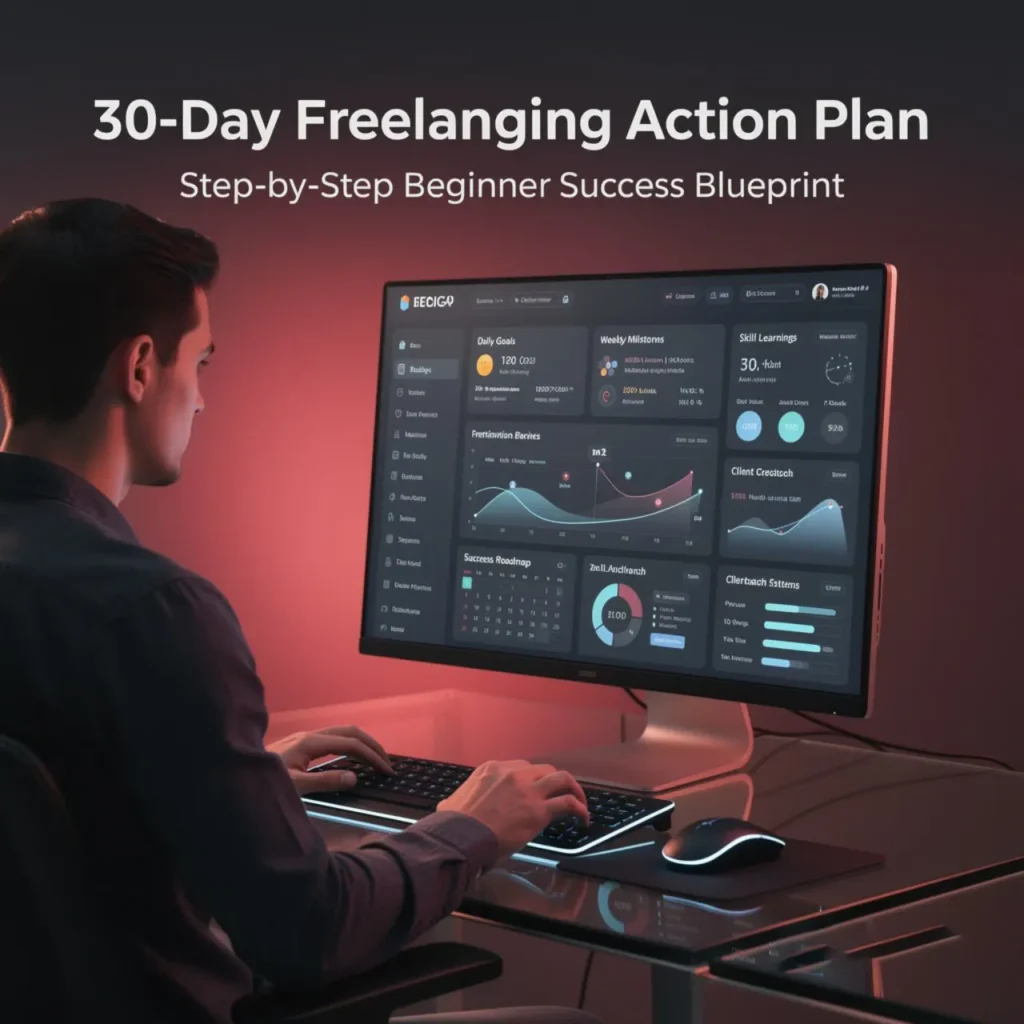
Step-by-Step 30-Day Freelancing Action Plan
Week 1 Learning Phase
Focus on one skill only.
Spend time:
- Learning fundamentals
- Watching tutorials
- Practicing daily
- Understanding market demand
Avoid multitasking between five different skills.
Week 2 Portfolio Creation
Build at least:
- 3 writing samples
- 3 design projects
- 1 demo website
- Several social media examples
Visible work matters more than claims.
Week 3 Profile Optimization
Optimize freelance profiles:
- Strong headline
- Clear service descriptions
- Professional image
- Portfolio uploads
- Relevant keywords
Most profiles fail because they look incomplete and untrustworthy.
Week 4 Client Outreach
Start applying aggressively.
Goals:
- Send 10 to 20 proposals daily
- Network consistently
- Improve communication
- Track responses
The early phase is often frustrating because rejection is normal.
Persistence separates successful freelancers from quitters.
Conclusion
The opportunity to succeed in freelancing has never been larger than it is in 2026. Businesses across the United States are actively searching for remote talent, digital skills are becoming more valuable every year, and AI tools are making independent work faster and more scalable. Beginners no longer need years of experience, expensive degrees, or massive investments to enter the market.
The real challenge is not access to opportunity. The real challenge is execution.
Most people delay action because they want certainty before starting. Freelancing does not reward hesitation. It rewards consistent practice, continuous learning, strong communication, and the willingness to improve through real-world experience.
This guide on How to Start Freelancing in the USA With No Experience: The Beginner’s Blueprint for 2026 shows that beginners can realistically build freelance careers from scratch. Start with one skill, create practical projects, build a portfolio, optimize your profiles, and contact clients consistently.
Momentum matters more than perfection. The freelancers earning high income today were once beginners with zero clients, zero reviews, and zero confidence. The difference is that they started before feeling ready.



















Pingback: 21 Best Apps to Make Money in the U.S.