Now Reading: How to Grow a YouTube Channel Fast in 2026
-
01
How to Grow a YouTube Channel Fast in 2026

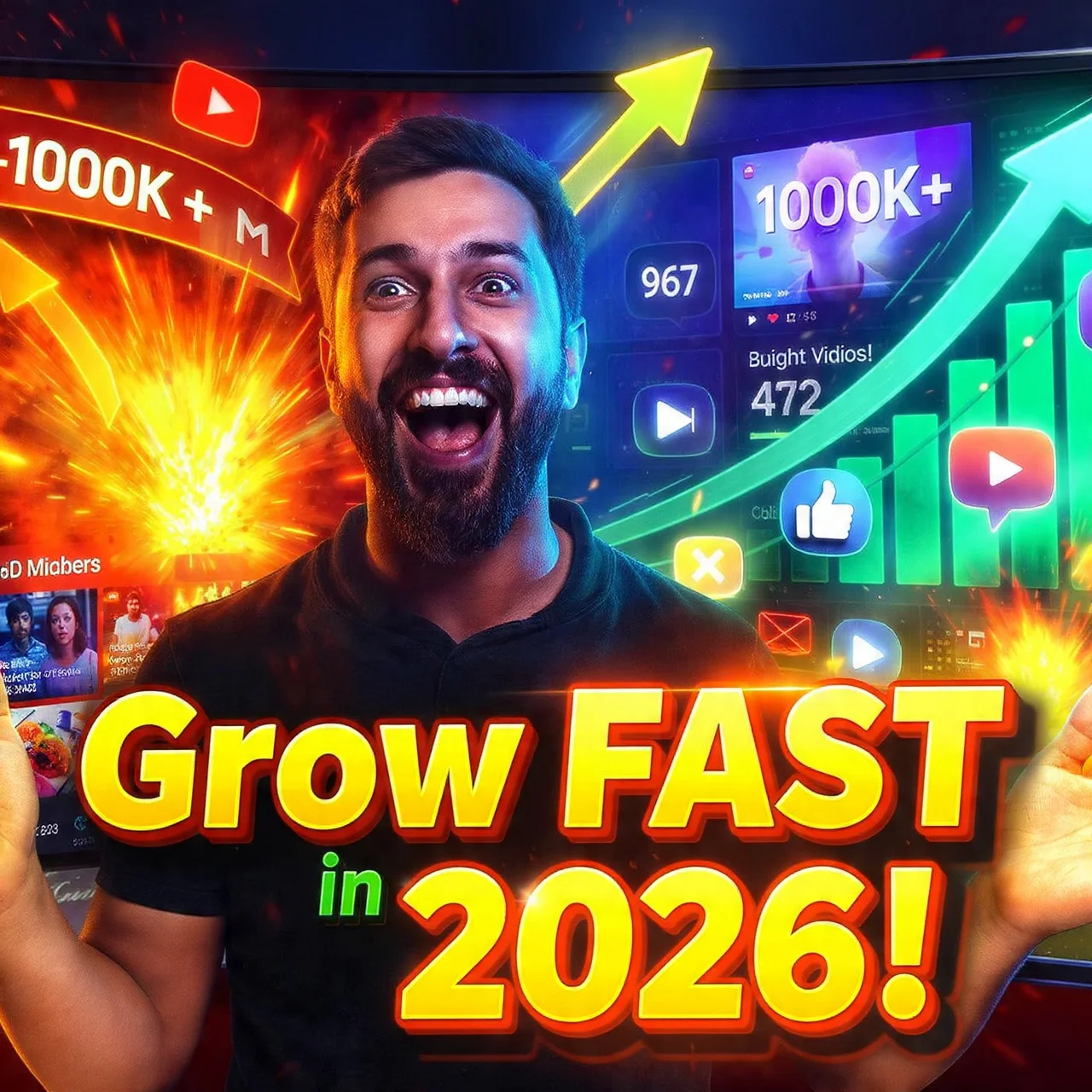
Growing a YouTube channel in 2026 is very different from what it used to be and even just a couple of years ago. The platform has evolved, the algorithm is smarter, competition is higher, and viewers are more selective than ever.
But here’s the good news: growth is still very possible, and in many ways, it’s more predictable than before.
If you understand how YouTube actually works today, and you focus on the right things instead of outdated advice, you can grow much faster than most people.
This guide breaks everything down in a simple, practical way so you can start applying it immediately.

The Truth About Fast Growth
Before anything else, let’s clear something up.
Fast growth on YouTube doesn’t mean going viral overnight.
It means:
- Getting your first traction faster
- Improving with every video
- Building momentum instead of guessing
- Reaching monetization sooner than average
Most beginners waste months doing the wrong things. If you avoid that, you’re already ahead.

Step 1: Pick a Niche That Actually Works
One of the biggest mistakes beginners make is choosing a niche based solely on passion.
Passion matters, but it’s not enough.
You need a niche that has:
- Demand people are searching for it
- Content opportunity not overly saturated, or you can stand out
- Monetization potential
Good niches in 2026 usually fall into:
- Education how-to, tutorials
- Finance/money/side hustles
- Health & fitness
- Tech & AI tools
- Self-improvement
- Entertainment with a twist
What to avoid:
- Random content with no direction
- Posting whatever you feel like
- Copying trends without a strategy
Think of your channel like a brand, not a random content dump.

Step 2: Understand What Actually Makes Videos Perform
This is where most people get it wrong.
They think:
- Better camera = more views
- More effort = more views
- Longer videos = more views
That’s not how YouTube works.
YouTube cares about ONE thing:
Viewer behavior
Specifically:
- Click-through rate CTR → Do people click your video?
- Watch time → Do they stay?
- Retention → How long do they stay?
- Engagement → Likes, comments, shares
If your video keeps people watching, YouTube pushes it.
That’s it.

Step 3: Focus on Titles & Thumbnails
If people don’t click, nothing else matters.
You could have the best video ever, but if no one clicks, it’s dead.
A strong title should:
- Create curiosity
- Promise value
- Be clear, not confusing
Examples:
- I Tried YouTube for 30 Days. Here’s What Happened
- Why Your Videos Get No Views: Fix This
- How I Made My First $100 on YouTube
A strong thumbnail should:
- Be simple, not cluttered
- Use contrast and emotion
- Be readable even on mobile
Think: Would I click this?
If the answer is no, fix it.

Step 4: Hook Viewers in the First 5 Seconds
This is where most videos fail.
People click, but they leave immediately.
That tells YouTube:
This video is not worth promoting.
Your first 5 to 10 seconds should:
- Grab attention instantly
- Tell viewers what they’ll get
- Create curiosity
Bad opening:
Hey guys, welcome back to my channel…
Good opening:
Most people fail on YouTube because they do THIS wrong…
Hook first. Introductions later or skip them entirely.

Step 5: Make Watchable Content
There’s a difference between:
- Informative content
- Watchable content
You need both, but watchability wins.
Keep people engaged by:
- Cutting out boring parts
- Changing visuals every few seconds
- Using pattern interrupts, zoom, text, and cuts.
- Talking like a human, not a robot
Think:
If someone gets bored, they leave.
If they leave, your video dies.

Step 6: Consistency Beats Perfection
Most beginners overthink.
They:
- Spend weeks on one video
- Try to make everything perfect
- Burn out quickly
Meanwhile, others grow faster by:
- Posting consistently
- Learning from each upload
- Improving step by step
A better approach:
- Aim for 1 to 3 videos per week
- Focus on improvement, not perfection
Your first 10 to 20 videos are practice.
Treat them that way.

Step 7: Learn from Your Data
YouTube gives you everything you need: analytics.
But most people ignore it.
Key things to track:
- CTR click-through rate
- Average view duration
- Audience retention graph
What to look for:
- Where people drop off
- Which videos perform better
- What topics get more clicks
Then ask:
Why did this work?
Double down on what works.

Step 8: Start with Search-Based Content
If you’re new, don’t chase viral content immediately.
Start with search-based videos.
These are videos people are actively looking for.
Examples:
- How to edit videos on a phone?
- How to start a YouTube channel in 2026?
- Best free video editing apps
Why this works:
- Easier to rank
- Brings consistent traffic
- Builds initial audience
Once you gain traction, then move into broader or viral-style content.

Step 9: Build Momentum with Series Content
Instead of random videos, create a series.
Example:
- Day 1 of growing a YouTube channel
- Day 2…
- Day 3…
Or:
- Beginner Guide Part 1
- Part 2
- Part 3
This:
- Keeps viewers coming back
- Builds binge-watching behavior
- Increases overall watch time

Step 10: Don’t Wait for Perfect Equipment
You don’t need:
- Expensive cameras
- Fancy lighting
- Studio setup
You can start with:
- A smartphone
- Basic mic or even phone audio
- Free editing software
What matters more:
- Your idea
- Your delivery
- Your clarity
People watch value, not gear.

Step 11: Use Short-Form Content Strategically
Short-form videos, Shorts, are still powerful in 2026.
But don’t rely on them alone.
Use Shorts to:
- Get attention
- Test ideas
- Drive traffic to long videos
Important:
Short-form and long-form audiences are always.
Use them as a tool and not your whole strategy.

Step 12: Create for Humans, Not the Algorithm
Ironically, the best way to grow is to stop obsessing over the algorithm.
Instead, focus on:
- What your audience wants
- What keeps them watching
- What solves their problem
If people enjoy your content, the algorithm follows.

Step 13: Improve One Thing Per Video
Don’t try to fix everything at once.
Focus on one improvement per upload:
- Better hook
- Better thumbnail
- Better editing
- Better storytelling
Small improvements = big results over time.

Step 14: Be Patient but Strategic
Growth takes time, but it shouldn’t feel random.
If you:
- Post consistently
- Learn from data
- Improve every video
You’ll start seeing:
- First few views
- Then hundreds
- Then thousands
Momentum builds gradually.

Step 15: Avoid These Common Mistakes
Most beginners fail because of these:
1. Posting random content
No niche = no growth
2. Ignoring thumbnails & titles
No clicks = no views
3. Talking too slowly or being boring
Low retention = no promotion
4. Quitting too early
Most quit before momentum starts
5. Overthinking everything
Execution > perfection

Step 16: Your First 30 Days Plan
If you want a simple roadmap:
Week 1:
- Pick niche
- Study 10 to 20 videos in your niche
- Upload 2 to 3 videos
Week 2:
- Improve titles/thumbnails
- Upload 2 to 3 more
Week 3:
- Focus on retention
- Analyze performance
Week 4:
- Double down on what works
- Post consistently
By the end of 30 days, you’ll:
- Understand your audience
- Improve your content
- Build momentum
Final Thoughts
Growing on YouTube in 2026 is not about luck.
It’s about:
- Understanding how the platform works
- Creating content people actually want
- Staying consistent long enough to improve
Most people fail because they:
- Overcomplicate things
- Follow outdated advice
- Quit too soon
If you keep it simple and focus on what matters, you’ll stand out.